We make boring business stories sparkle.
Pricing Strategy for Small Businesses in Singapore: How to Set Prices
A practical pricing strategy guide for small business owners who want better margins, clearer packages and more confidence when quoting.

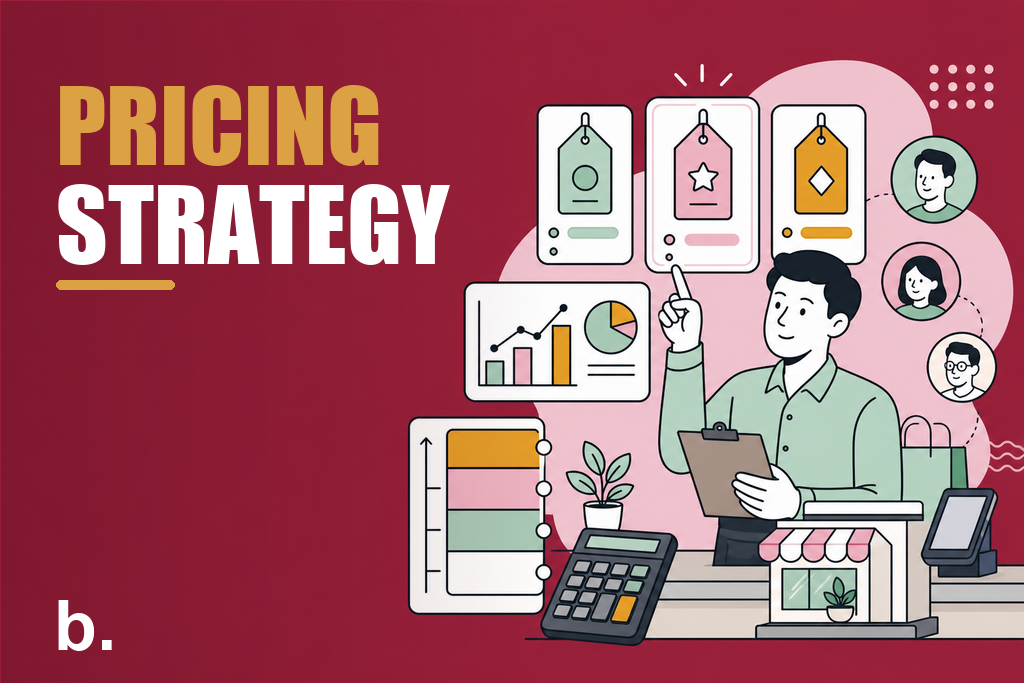
Many small business owners underprice because they only think about winning the sale. The problem is that a sale without margin can make the business busier and weaker at the same time.
Pricing is not just a number. It is a statement about value, positioning, cost control and who your business is built to serve.
Four ways to think about pricing
Most SMEs use a mix of these methods. The mistake is using only one without checking the others.
Pricing method | How it works | Best use | Risk |
|---|---|---|---|
Cost-plus | Add margin on top of cost | Products, services with clear labour/material cost | Can ignore customer value |
Market-based | Compare competitors and alternatives | Crowded categories | Can trap you in price wars |
Value-based | Price according to outcome and buyer value | Specialised services, B2B, premium offers | Needs proof and confidence |
Package-based | Create tiers or bundles | Services, retainers, courses, subscriptions | Scope must be controlled |
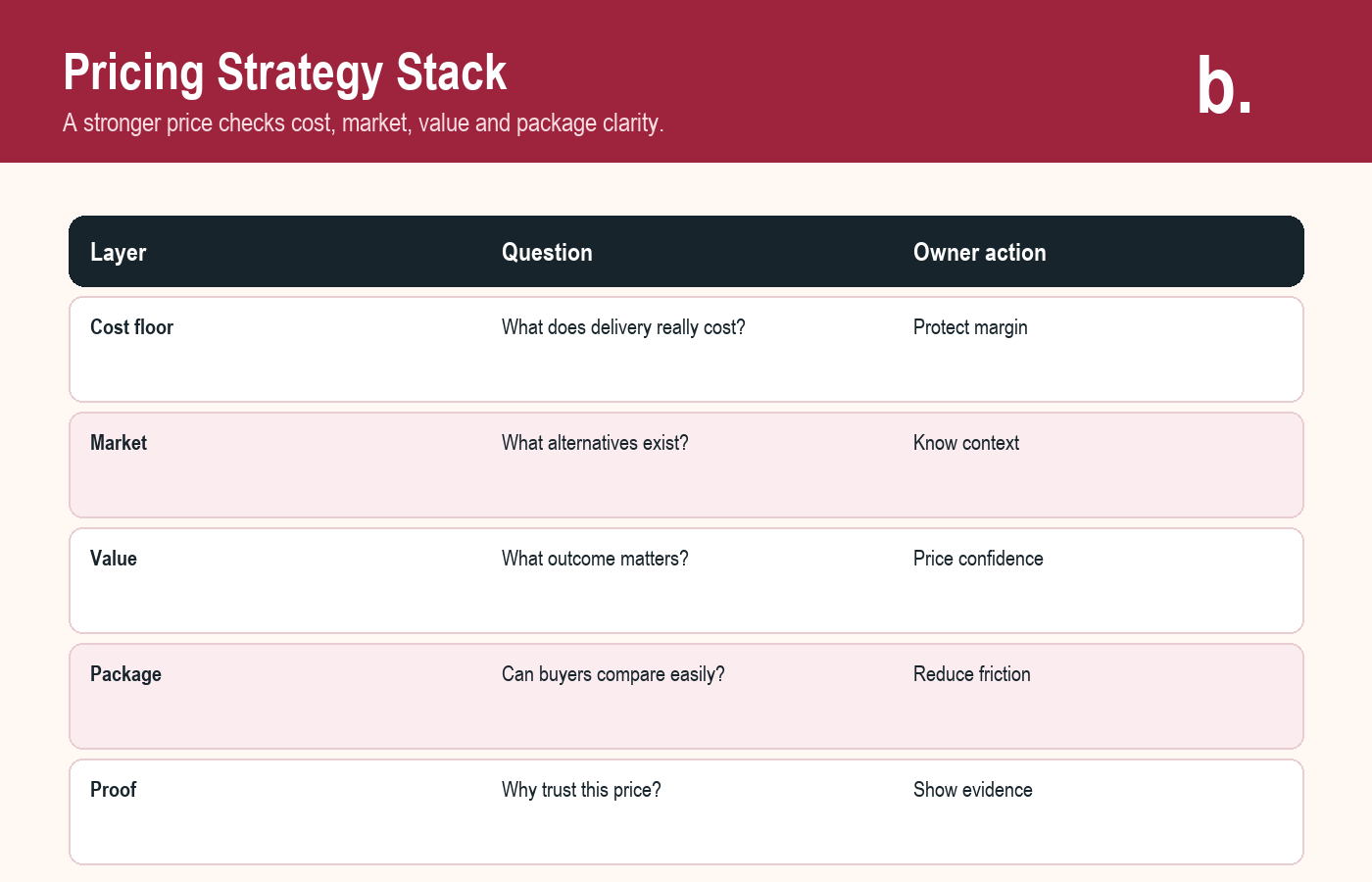
Start with cost, but do not stop there
You must know your cost floor: materials, labour, subcontractors, software, rent, payment fees, delivery, admin time and taxes. But the customer does not buy your cost. They buy the outcome, convenience, trust, speed or reduced risk.
Build pricing around a clear buyer
A price that is too high for one customer may be reasonable for another. Before changing the number, define the buyer.
- Budget buyer: wants the lowest acceptable option.
- Convenience buyer: pays for speed and reduced effort.
- Premium buyer: pays for trust, expertise, status or risk reduction.
- Business buyer: pays when the service helps revenue, time, compliance or operations.
Use packages to make decisions easier
Packages help customers choose. They also help owners avoid custom quoting every small request.
Starter
Useful for a narrow problem, entry offer or first-time buyer.
Standard
The main offer most customers should choose. This should usually be the clearest value.
Premium
For customers who need speed, depth, support, customisation or lower risk.
When to raise prices
Raise prices when demand is strong, scope has grown, costs have increased, your proof has improved, or your current clients are not the right fit anymore.
Do not raise prices randomly. Improve the offer, communicate clearly and apply new pricing to new customers or new renewal cycles where appropriate.
Common pricing mistakes
- Pricing only by competitor comparison.
- Forgetting your own time as a cost.
- Offering too many discounts.
- Customising everything without charging for complexity.
- Confusing cheap pricing with good positioning.
Useful next reads
The bottom line
Better pricing gives the business room to deliver well. If every sale needs a discount to close, the issue may be positioning, proof, buyer fit or packaging, not just price.
Frequently Asked Questions
What is the best pricing strategy for small businesses?
There is no single best strategy. Most small businesses should know their cost floor, compare alternatives, understand buyer value and package offers clearly.
Should I price lower than competitors?
Not automatically. Lower pricing can win attention, but it can also attract poor-fit customers and weaken margins.
How do I know if my price is too low?
Signs include too much demand, constant scope creep, low profit despite busy work, and customers accepting quickly without discussing value.
Should small businesses show prices publicly?
It depends on the offer. Public pricing works well for standard packages, while complex services may need starting prices or ranges.
Explore More Content
Table of Content