We make boring business stories sparkle.
The Customer Journey Explained: A Simple Guide for SMEs
From stranger to loyal advocate: the 5 stages of the customer journey, what customers think at each, and what your business should do at every step.

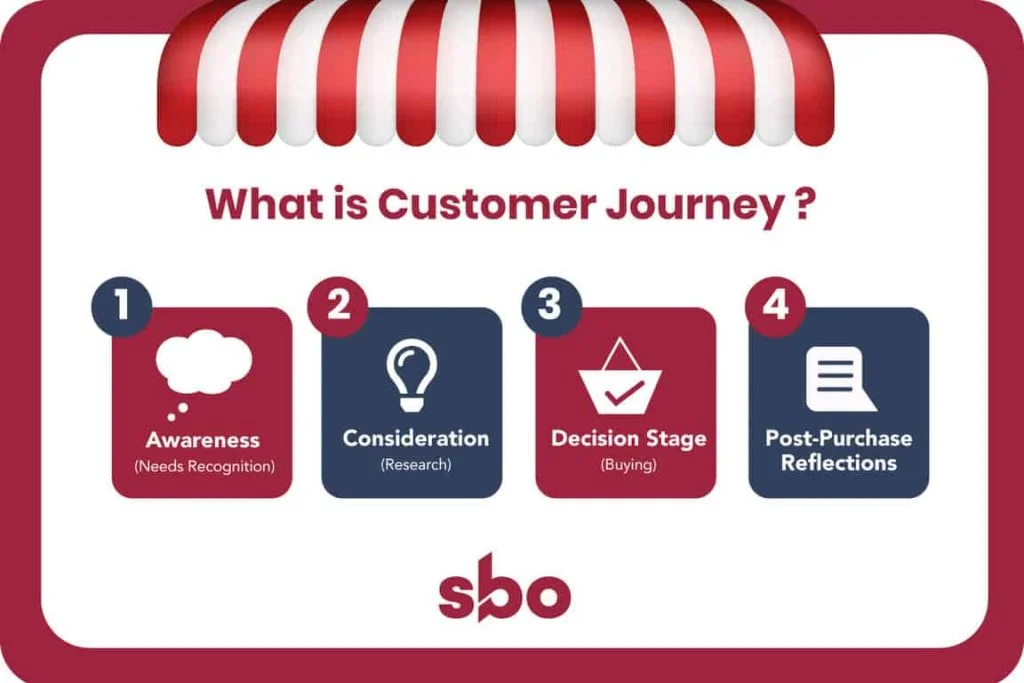
Almost nobody buys the first time they hear of you. A customer notices a problem, looks around, compares options, finally buys, and then decides whether they will ever come back or tell a friend. That whole path, from stranger to loyal advocate, is the customer journey.
For a Singapore SME, understanding this journey is the difference between marketing that feels random and marketing that actually moves people toward a sale. This guide breaks the journey into five clear stages, what the customer is thinking at each one, and what your business should do to move them forward.
What is the customer journey?
The customer journey is the full experience someone goes through with your business, from first becoming aware of a need to becoming a repeat customer who recommends you. It is not a single moment of buying; it is every touchpoint along the way.
Mapping it matters because each stage needs a different message. Someone who just realised they have a problem is not ready for a hard sell, and a loyal customer does not need to be convinced you exist. Match your marketing to the stage, and conversion gets far easier.
The 5 stages of the customer journey
Most journeys move through these five stages. Your job is to meet the customer with the right content and experience at each one.
Stage | What the customer is thinking | Your goal | Tactics that work |
|---|---|---|---|
Awareness | “I have a problem or need.” | Get found and educate | SEO, blog content, social media, ads |
Consideration | “What are my options?” | Build trust and stand out | Comparisons, reviews, case studies, guides |
Decision | “Which one should I choose?” | Make buying easy and safe | Clear pricing, testimonials, strong offer |
Retention | “Was this a good choice?” | Deliver and stay in touch | Great service, follow-ups, support, email |
Advocacy | “I should tell others.” | Turn happy customers into promoters | Referral rewards, review requests, loyalty perks |

1. Awareness
The customer realises they have a need, sometimes triggered by a problem, sometimes by seeing something online. They are not searching for your brand yet, just for answers. This is where being visible on Google and social media matters most.
2. Consideration
Now they are actively researching and comparing options. They read reviews, compare providers, and weigh trade-offs. Helpful content, social proof, and a professional presence move you onto their shortlist. Strong SEO and backlinks help you show up exactly when they are searching.
3. Decision
The customer is ready to buy and just needs a reason to choose you over the alternatives. Reduce friction and risk: clear pricing, easy contact, honest testimonials, and a confident offer. Small doubts at this stage lose sales.
4. Retention
The sale is not the finish line. How you deliver, support, and follow up decides whether the customer stays. Retaining an existing customer is far cheaper than winning a new one, yet most SMEs underinvest here.
5. Advocacy
A delighted customer becomes your best marketer. Reviews, referrals, and word of mouth feed straight back into the awareness stage for the next person, making the whole journey compound over time.
Why mapping the journey matters for SMEs
Most small businesses pour budget into the awareness stage and neglect everything after the sale. That is expensive and leaky. Mapping the full journey shows you where customers actually drop off so you can fix the real bottleneck.
- It tells you what content to create for each stage instead of guessing.
- It reveals which touchpoints are missing or broken.
- It shifts focus toward retention and referrals, where margins are highest.
- It aligns your marketing, sales, and service around the same path.
Common customer journey mistakes
Watch for these traps that quietly cost SMEs sales and repeat business:
| Mistake | The fix |
|---|---|
| Only investing in awareness and ads | Build content and trust for the later stages too |
| Hard-selling people who are still researching | Educate first, sell when they are ready |
| Going silent after the sale | Follow up, support, and ask for feedback |
| Never asking happy customers for reviews | Make review and referral requests routine |
How to map your own customer journey
You do not need expensive tools to start. Sketch the five stages, then for each one answer three questions: what is the customer thinking, where do they interact with us, and what would move them to the next stage. To attract people in the early stages, make sure you are listed where they search, including the top business directories in Singapore.
Frequently Asked Questions
What are the stages of the customer journey?
A common model has five stages: awareness, consideration, decision, retention, and advocacy. The customer moves from realising they have a need, to comparing options, to buying, to deciding whether to stay, and finally to recommending you to others. Each stage needs different marketing.
Why is the customer journey important for a small business?
It helps you match your marketing to what the customer actually needs at each stage, instead of guessing. It also shows where customers drop off, so you can fix the real bottleneck, and it pushes attention toward retention and referrals, which are usually more profitable than constantly chasing new leads.
What is the difference between the customer journey and a sales funnel?
A sales funnel is mostly about your internal steps to turn a lead into a sale. The customer journey is broader and customer-centric: it includes everything the customer experiences before, during, and after buying, including retention and advocacy, not just the path to the first purchase.
How do I start mapping my customer journey?
List the five stages and, for each, answer three questions: what is the customer thinking, where do they interact with your business, and what would move them to the next stage. Then fill the gaps with the right content, touchpoints, and follow-ups.
The bottom line
The customer journey reframes marketing from a one-off push into a relationship that compounds. When you understand what a customer needs at each stage, you stop wasting budget shouting at people who are not ready and start guiding them smoothly from first click to loyal advocate.
Start simple: map the five stages for your own business, find the weakest one, and fix it first. For most SMEs, the biggest untapped wins are not in louder ads, but in the consideration, retention, and advocacy stages everyone else ignores.
Explore More Content
Table of Content