
We make boring business stories sparkle.
How The Pique Lab Is Transforming Science Education in Singapore
How The Pique Lab built a mentorship-driven teaching system and grew from two tutors into a regional education company.

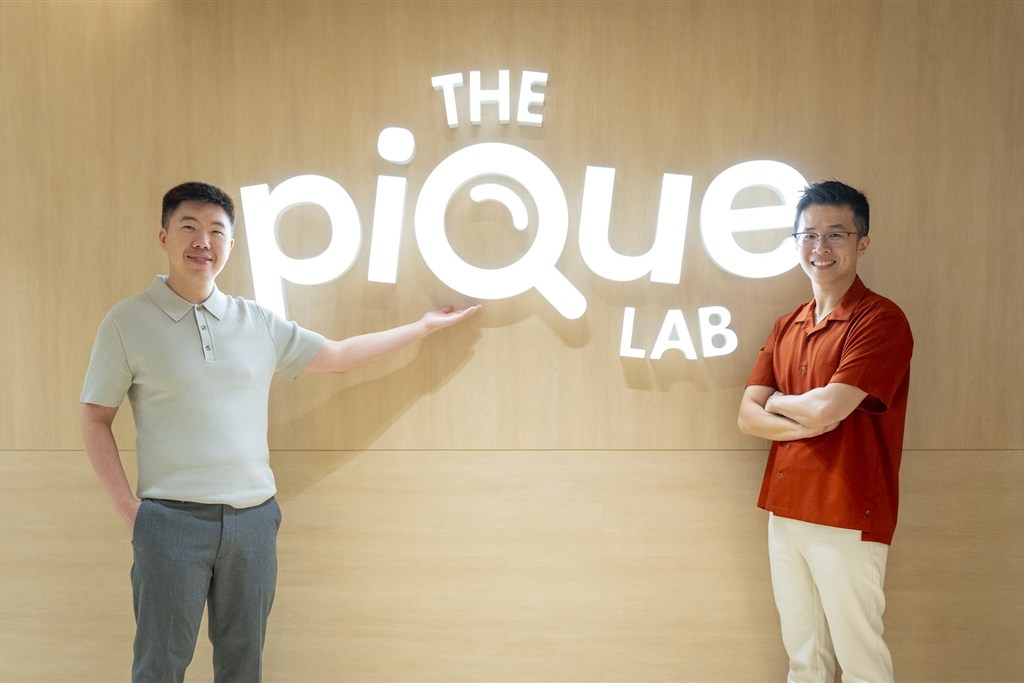
Over a decade since its founding, The Pique Lab continues to reshape how Singapore’s students learn Science, not just through curriculum, but through a mentorship-driven approach to teaching that’s helped over 20,000 students since 2013.
Ask most parents what makes a good science tuition centre, and they’ll talk about curriculum: good notes, clear explanations, maybe a nice app.
Ask Mervin Soon, and he’ll tell you the real bottleneck in Singapore’s private education industry has never been curriculum. It’s people.
What Mervin noticed early on was a gap in how private tutors were developed. Unlike teachers entering MOE schools, there was no PGDE, no NIE track, nothing resembling a formal pipeline.
Without that, a private tutoring job could easily look like a dead end rather than a career, and plenty of graduates who might have made excellent teachers don’t give it a second thought.
Mervin’s answer to that problem, built over more than a decade, is what actually explains how The Pique Lab — a science tuition centre he co-founded in 2013 at age 19, alongside co-founder Kenneth Mak — went from two people tutoring primary schoolers to a company of over 100 staff, with operations spanning Singapore, Malaysia, China and the Philippines.
It’s not really a story about a better way to teach the water cycle. It’s a story about how to mentor someone into becoming a genuinely good teacher, without turning them into a copy of the person training them.
The Gap in the Classroom
Mervin and Kenneth met while both studying at Singapore Management University (SMU), where they were each already giving private, one-on-one tuition on the side.
Tutoring independently, they noticed the same thing: the students who struggled weren’t necessarily less capable. They’d spend hours memorising content and still couldn’t apply it the moment an exam question asked them to use a concept in an unfamiliar way. They knew the definitions. They didn’t know how to think with them.
That gap between memorising and applying became the starting problem. Solving it for students, though, turned out to be the easier half of the business. The harder half was making sure it could be taught the same way, reliably, by teachers who weren’t Mervin or Kenneth themselves.
Building the Curriculum and Mentoring the People Who Deliver It
The teaching side of the answer is Complete Concept Integration™ (CCI): a methodology that moves away from teaching content in isolation, and instead trains students to recognise question patterns, link concepts from different topics together, and apply structured answering techniques under exam conditions.
Whether this methodology actually works shows up in the numbers: More than 20,000 students taught since 2013, an 86% distinction rate (AL1 to AL4) in the 2025 PSLE Science cohort, and a local primary school going as far as commissioning The Pique Lab to train its entire in-house Science department in the methodology.

But a curriculum is only as good as the person delivering it in the room, and that’s the half of the business most tuition centres struggle with.
The Pique Lab’s answer was its Teaching Associate Programme (TAP), a structured, 9-month-to-2-year training and mentorship system.
Fresh university graduates with limited teaching experience aren’t left to figure things out alone; senior teachers work closely alongside them, sharing what’s worked best over a decade of classes, while leaving room for each associate to find their own teaching style rather than imitate someone else’s. Experienced teachers are mentored on the same shared playbook, but focused on integrating it with the style they already bring, not replacing it.
The Teaching Associate Programme covers five skill layers:
| Skill layer | What it covers |
|---|---|
| Content Mastery | Concepts, question trends, answering structures |
| Attention Control | Pacing, tonality, how to hold a 10-year-old’s attention the way cartoons do |
| Classroom Management | Managing a room of 12-14 kids without becoming either a pushover or a drill sergeant |
| Performance Management | Giving cues and behaviour-specific praise to keep students engaged |
| Parent Communication | Managing expectations without creating friction. |
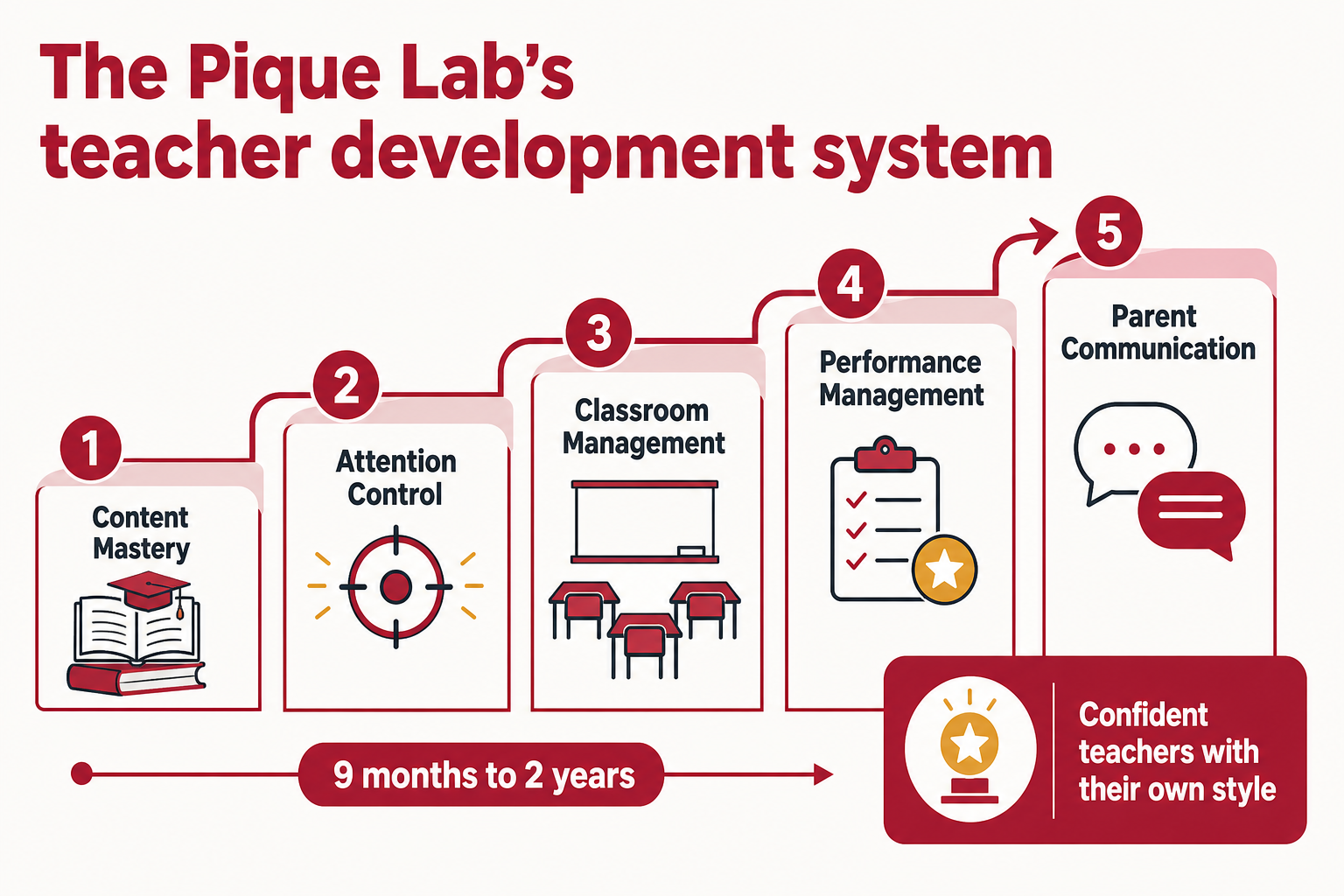
Associates who complete it don’t have to hunt for students; their classes end up with waiting lists.
“Subject knowledge alone doesn’t make someone a good teacher. A good teacher needs to be a good communicator first. They are someone who asks the right questions to sharpen a student’s thought process, sieves out their misconceptions, and uses stories and analogies to make abstract concepts feel relatable. That’s what we spend most of our training time on,” explains Kenneth, co-founder of The Pique Lab.
This is arguably The Pique Lab’s real competitive advantage. A good curriculum is one thing to build; a repeatable mentorship system that turns someone with little classroom experience into a confident teacher within two years, one who still sounds like themselves in front of a class, not like a scripted stand-in for whoever trained them, is another thing entirely.
Built Like a Company, Not Just a Tuition Centre
Behind that mentorship pipeline sits a formal career structure that goes beyond what most tuition centres offer.
New teachers spend their first two years as Junior Teaching Associates, working closely with senior mentors before facing a merit-based promotion review at the end of Year 2. Those who move to become Senior Teaching Associates take on appointments in either the Training Team (mentoring the next intake of new hires) or the Curriculum Team (helping design and refine the teaching materials everyone else uses).
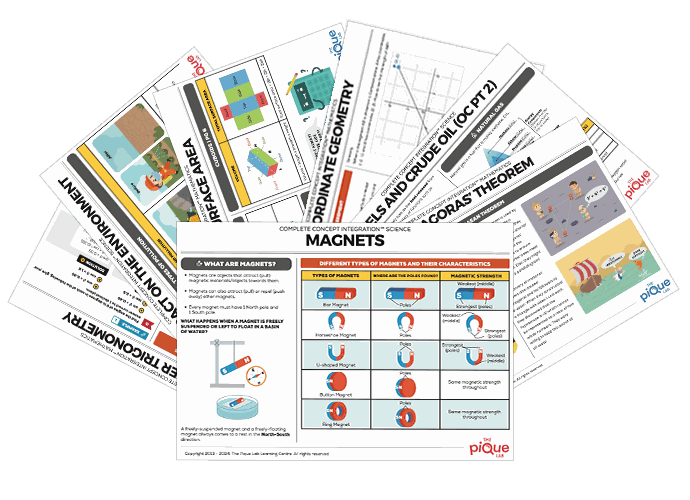
Every teacher is also backed by a full support structure that’s uncommon at this scale in private tuition: a Curriculum Team designing the lesson materials, a Training Team focused entirely on coaching, an Academic Support Team handling the physical logistics of printing and preparing materials so teachers don’t have to, a Customer Care Team fielding parent enquiries and scheduling, and a Design Team turning lesson content into the colourful notes and illustrations students actually study from.
Mervin traces some of that instinct back to his own school days. “Studying from dense, text-heavy notes was the low point of exam preparation for me. It was not the content itself, but the way it was presented,” he says. “That memory became a design principle for us, not just a complaint. Our notes are visually designed and colour-coded, because we treat that as core to how well a concept actually stays with a student, not a cosmetic add-on.”
Investing in the People Behind the Scenes
Running a tuition centre means fighting the clock in the opposite direction from most white-collar jobs. The busiest hours are evenings and weekends, exactly when the broader labour market is asking employers for more flexibility, not less. The company’s response hasn’t been to pretend that tension away; it’s been to design around it.
Teachers get genuine flexibility on days that don’t require them physically on-site, free to work from home between digital lessons and structure their day around their own working style.
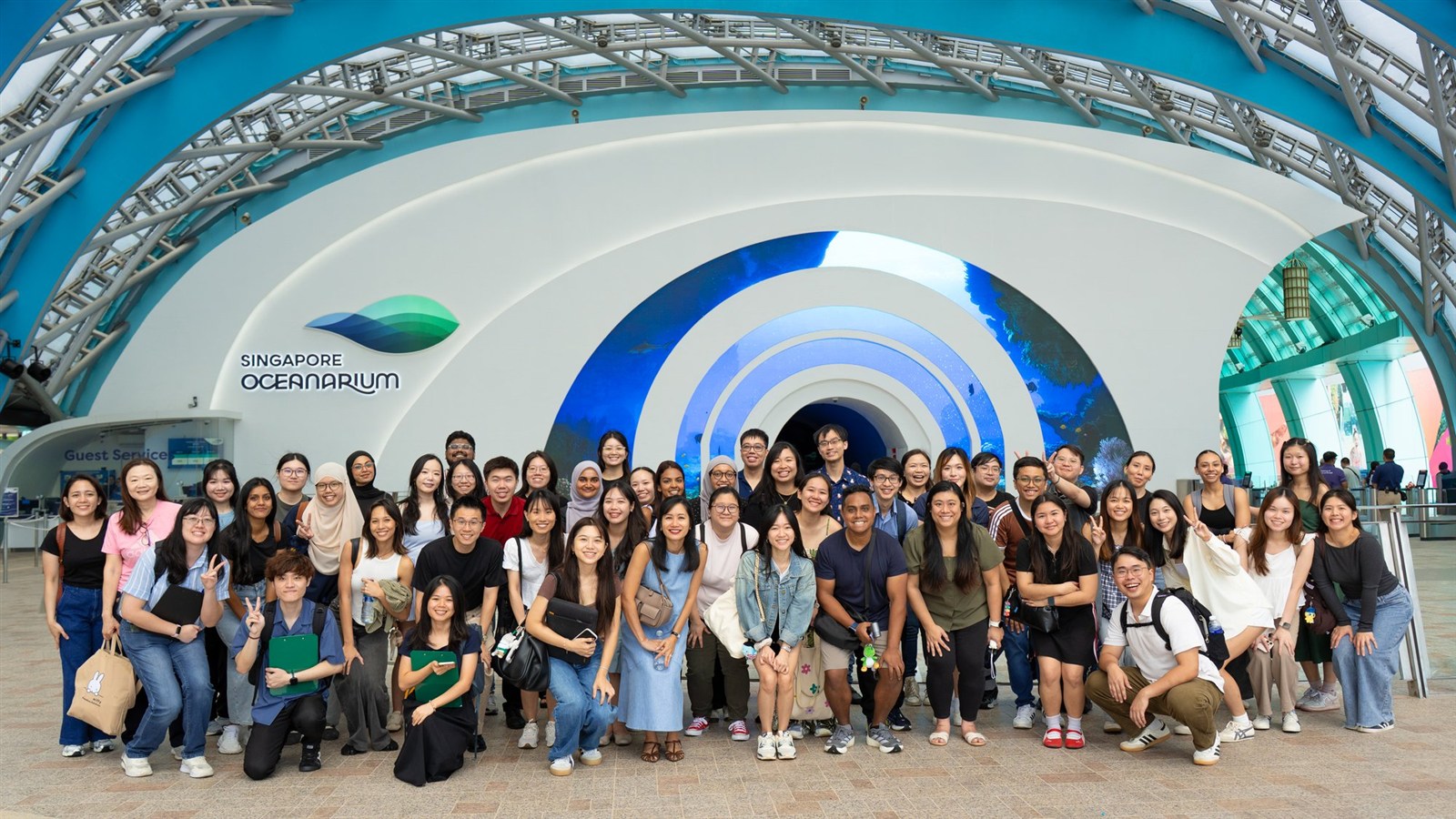
With their own in-house Software Engineering team — not typical infrastructure for a science tuition centre — the company has been focused on taking the manual, time-consuming parts of teaching off a teacher’s plate, so more of their time goes toward the classroom itself. Some of the latest optimisations include reducing the time and effort required for lesson preparation and teacher-parent communications.
Lesson plans, once split across separate apps, now live on a single internal platform. Parent communications around student tests have been folded into the same system: pre-test instructions and post-test feedback used to be written and sent out one by one, and now go out automatically instead, cutting down the manual admin work.
“The heart behind improving these systems is simple: The less time a teacher spends wrestling with logistics, the more time and energy goes into actually perfecting their craft and delivering an engaging lesson that lands,” says Mervin Soon, co-founder of The Pique Lab.
What’s Next For The Pique Lab
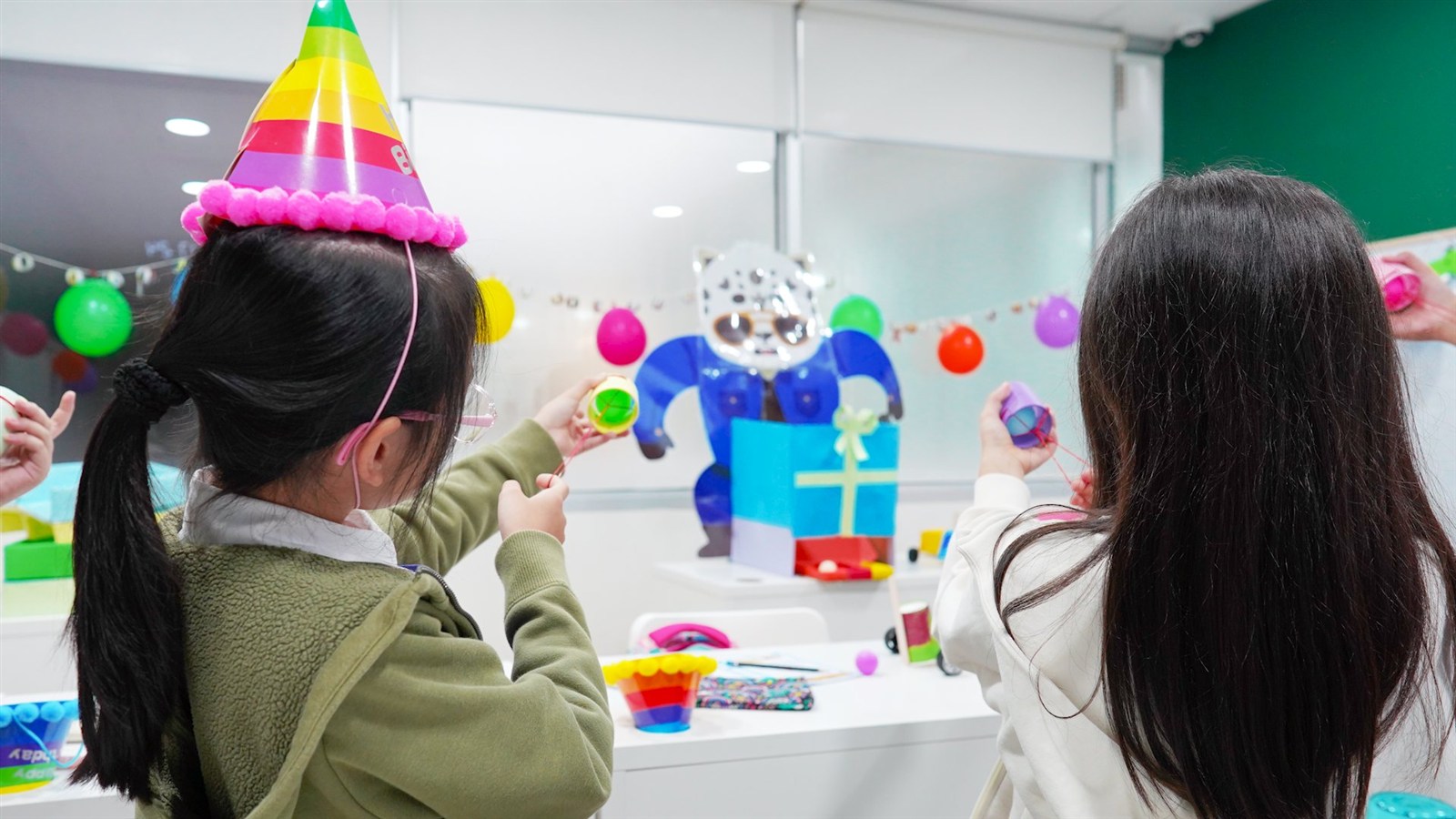
Ask Mervin and Kenneth what success looks like for the next chapter ahead, and their answer isn’t just a list of new programmes.
At the company’s most recent town hall, they laid out three measures instead:
- Build a culture of high ownership.
- Strengthen the operational systems behind the scenes.
- Make The Pique Lab the most fulfilling place in private tuition to work.
All three, in different ways, are the same instinct that built the Teaching Associate Programme, just pointed beyond the classroom.
It’s a useful reminder for any founder scaling a service business on the back of a single “star” methodology: the hard part usually isn’t the idea.
It’s building a mentorship system, and refining it again and again, that lets other people carry the idea forward in their own voice, not just repeat it in yours.
For a science tuition centre that started with two people and a whiteboard, that system of mentorship has become the actual business.
Frequently Asked Questions
When was The Pique Lab founded?
The Pique Lab was co-founded in 2013 by Mervin Soon and Kenneth Mak. It has since grown from two tutors into a company of over 100 staff.
What is Complete Concept Integration™ (CCI)?
CCI is The Pique Lab’s teaching methodology. It trains students to recognise question patterns, connect concepts across topics and apply structured answering techniques under exam conditions.
What is The Pique Lab’s Teaching Associate Programme?
The Teaching Associate Programme is a structured, 9-month-to-2-year training and mentorship system covering content mastery, attention control, classroom management, performance management and parent communication.
Explore More Content
Table of Content