
We make boring business stories sparkle.
Staff Handbook Singapore: Policies SMEs Should Have
A practical guide to staff handbook policies Singapore SMEs should document before people issues become inconsistent.

A staff handbook is not only for large companies. Once an SME has more than a few employees, undocumented rules become a management problem: leave is handled differently, claims are unclear, warnings feel personal and managers improvise.
A good staff handbook gives employees and managers a shared reference. It should support the employment contract, not contradict it.
Core policies every SME handbook should cover
Start with the policies that affect daily work and common disputes.
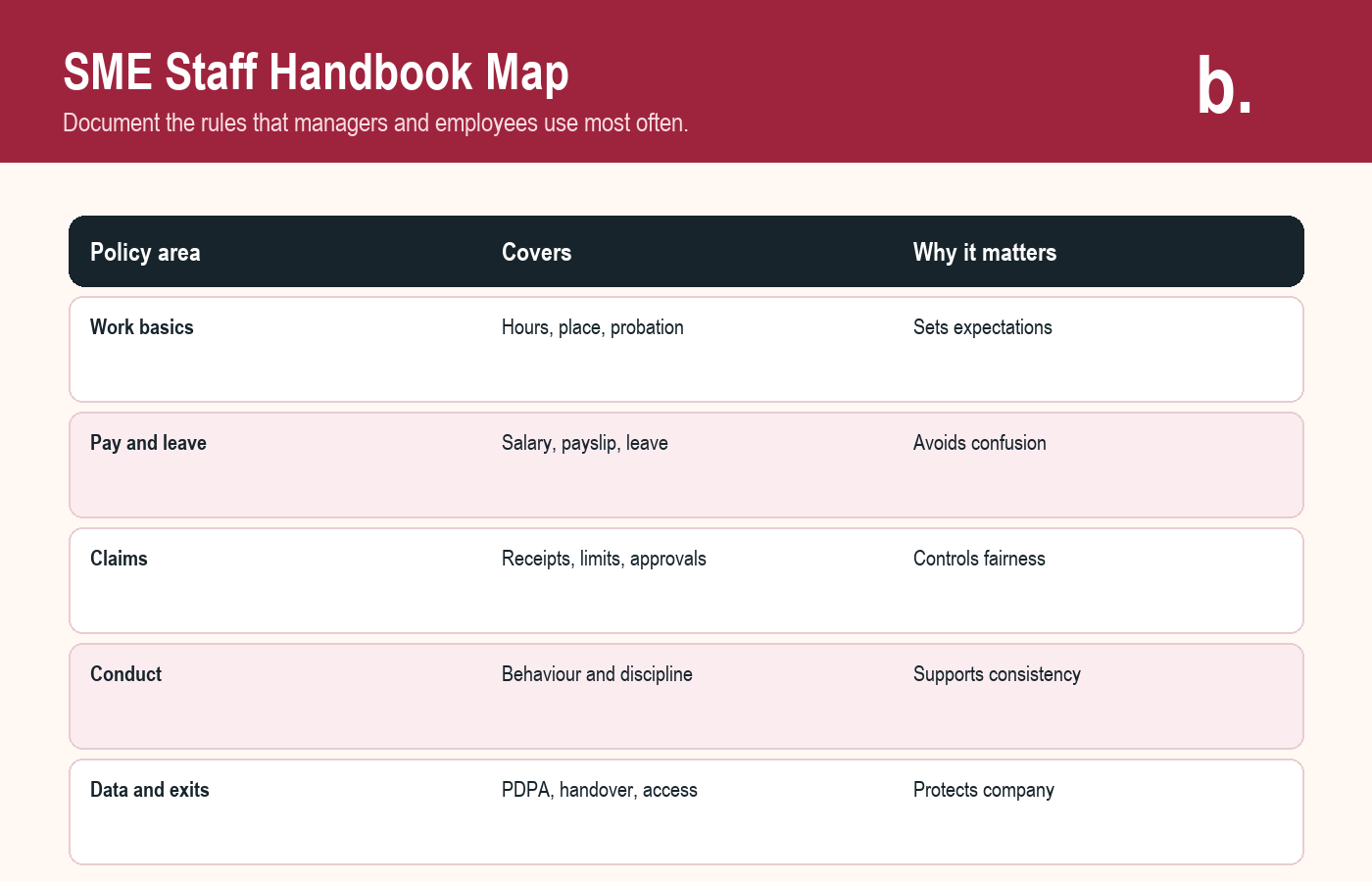
Policy area | What to include | Why it matters |
|---|---|---|
Employment basics | Working hours, probation, reporting line, place of work | Sets daily expectations |
Salary and payslips | Pay date, claims, deductions, bonuses, CPF process | Reduces payroll confusion |
Leave | Annual leave, sick leave, public holidays, unpaid leave | Keeps approvals consistent |
Claims and expenses | What is claimable, approval limits, receipts, timing | Controls cost and fairness |
Conduct and discipline | Attendance, harassment, conflicts, confidentiality, warnings | Gives managers a fair process |
Data and systems | Device use, passwords, customer data, PDPA basics | Protects company and personal data |
Performance and exits | Reviews, improvement plans, resignation, handover | Reduces surprises during difficult moments |
Start from legal basics, then add company rules
The handbook should align with Singapore employment requirements and the employee’s contract. MOM provides guidance on key employment terms and itemised payslips, and SMEs should check official guidance when setting employment documentation.
What the handbook should not do
- Do not copy another company’s handbook blindly.
- Do not promise benefits the business cannot afford.
- Do not use vague disciplinary wording that managers apply inconsistently.
- Do not contradict employment contracts or statutory requirements.
- Do not hide important rules in informal chat messages only.
How to roll out a staff handbook
- Draft the core policies in plain English.
- Check against contracts and current practice.
- Get HR/legal review where needed.
- Brief managers first so they apply rules consistently.
- Share with staff and collect acknowledgement.
- Review at least once a year or after major policy changes.
Policies that deserve extra care
Leave and attendance
Be clear on approval, notice, medical certificates, urgent leave and no-show handling.
Claims
Set receipt requirements, approval limits and submission deadlines. This prevents small claims from becoming emotional arguments.
Personal data and confidentiality
Employees may handle customer, employee and supplier data. The handbook should explain what data can be accessed, shared, stored or deleted, and when to escalate incidents.
Official and practical references
- MOM: key employment terms
- MOM: itemised payslips
- MOM: annual leave
- PDPC: Personal Data Protection Act overview
- SBO: Employment Act guide for SME employers
The bottom line
A staff handbook helps an SME manage people without relying on memory, mood or one manager’s personal style. It is not bureaucracy when it prevents unfairness and confusion.
Frequently Asked Questions
Does every Singapore SME need a staff handbook?
It is not always mandatory, but it becomes useful once the company has repeated people policies such as leave, claims, conduct, payroll and performance.
Is a staff handbook the same as an employment contract?
No. The employment contract sets individual employment terms, while the handbook explains company policies and day-to-day rules.
What should SMEs include in a staff handbook?
Start with working hours, salary process, leave, claims, conduct, confidentiality, data protection, performance and exit procedures.
How often should a staff handbook be updated?
Review it at least yearly and whenever employment laws, company policies, benefits or operating practices change.
Explore More Content
Table of Content