We make boring business stories sparkle.
Choosing an SSIC Code in Singapore: What Business Owners Should Know
A practical guide to choosing SSIC codes that match your real business activity during Singapore company setup.

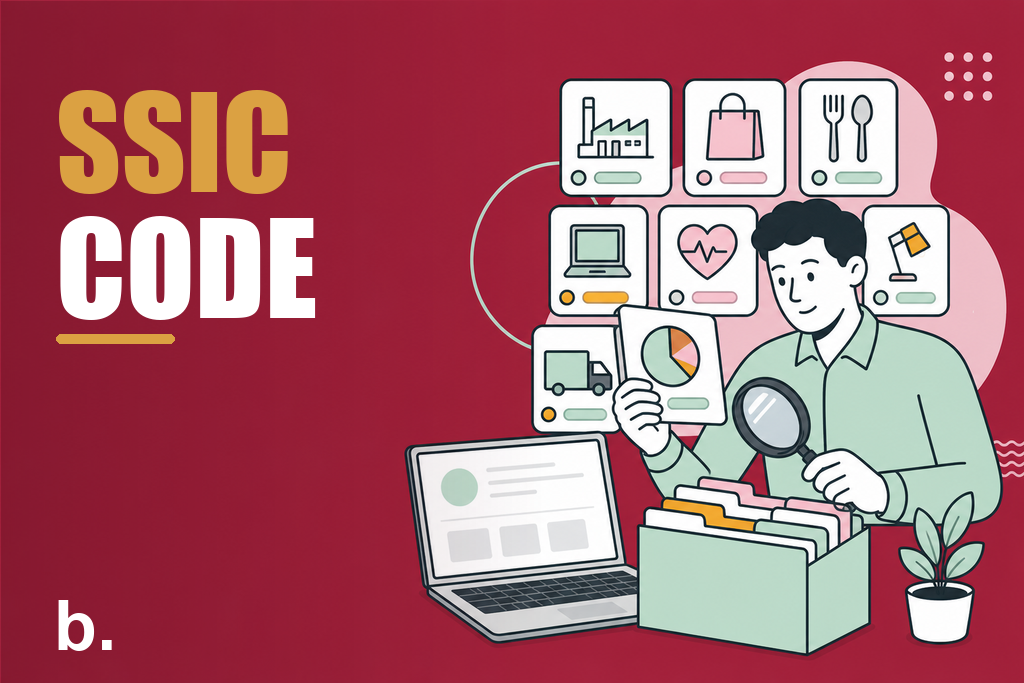
The SSIC code is easy to rush through during company setup because it looks like an administrative field. But it is not just a number. It tells ACRA and other parties what your business mainly does.
Choosing the closest SSIC code helps with incorporation, licence checks, bank account opening, government forms and future compliance. Choosing a vague or wrong code can make the business look unclear.
What is an SSIC code?
ACRA explains that the Singapore Standard Industrial Classification is Singapore’s system for classifying business activities. ACRA-registered entities use 5-digit SSIC codes for their primary business activity and, where applicable, secondary business activity.
SSIC decision | What it means | Owner note |
|---|---|---|
Primary activity | The main activity that best describes how the business earns revenue | Pick the closest real activity, not the broadest label |
Secondary activity | A second meaningful activity if the company does more than one thing | Use only when it is genuinely relevant |
Keyword search | Bizfile lets you search by business activity keywords | Try customer and industry terms |
Licence link | Some activities may point to permits or agency approval | Check before launch |
Future update | Business activity can change as the company evolves | Update details when the registered activity no longer fits |

How to choose the right SSIC code
Start with the business model, not the nicest-sounding label. A marketing agency, software product company, e-commerce seller and management consultancy may all use laptops, but they should not automatically use the same code.
- Write down what customers pay you for.
- Separate main revenue from side activities.
- Search Bizfile using multiple keywords.
- Read the code descriptions carefully.
- Choose the code that best matches the current business, not a future dream.
- Check whether the activity suggests licences or agency approvals.
Primary vs secondary activity
The primary activity should describe the main business. The secondary activity is useful only if the company has another meaningful line of business. Do not use the secondary code as a dumping ground for every possible future idea.
Example: agency plus software
If most revenue comes from service retainers, the primary activity may sit closer to consultancy, marketing or IT service work. If the company sells a software product as the main revenue stream, a software-related SSIC code may be a closer match. The facts matter.
Common SSIC mistakes
- Picking a code because a friend used it: similar businesses can have different actual activities.
- Choosing too broadly: broad labels can make licence and banking checks less clear.
- Choosing for future plans: use the activity that exists now, then update if the business changes.
- Ignoring regulated activities: an SSIC search can surface activities that need further checks.
- Not documenting the rationale: founders should know why the code was chosen.
Official references
Frequently Asked Questions
What does SSIC stand for?
SSIC stands for Singapore Standard Industrial Classification. It is Singapore’s classification system for business activities.
How many SSIC codes can a company have?
ACRA guidance refers to one primary business activity and, where applicable, one secondary business activity.
Should I choose a broad or specific SSIC code?
Choose the code that best describes the real business activity. Too broad can create confusion; too narrow may not fit what you actually do.
Can I change my SSIC code later?
Yes, company information can be updated when business activities change. Keep the registered activity aligned with what the company actually does.
Explore More Content
Table of Content