
We make boring business stories sparkle.
Sales Pipeline for Small Businesses: How to Track Leads to Closed Deals
A practical sales pipeline guide for small business owners who want to stop losing leads in WhatsApp, email and memory.

Many small businesses do not have a sales problem at first. They have a tracking problem. Leads come through WhatsApp, email, referrals, calls and social media, then disappear because nobody knows the next step.
A sales pipeline is a simple system for tracking a lead from first enquiry to closed deal. It does not need to be complicated. It only needs to make follow-up visible.
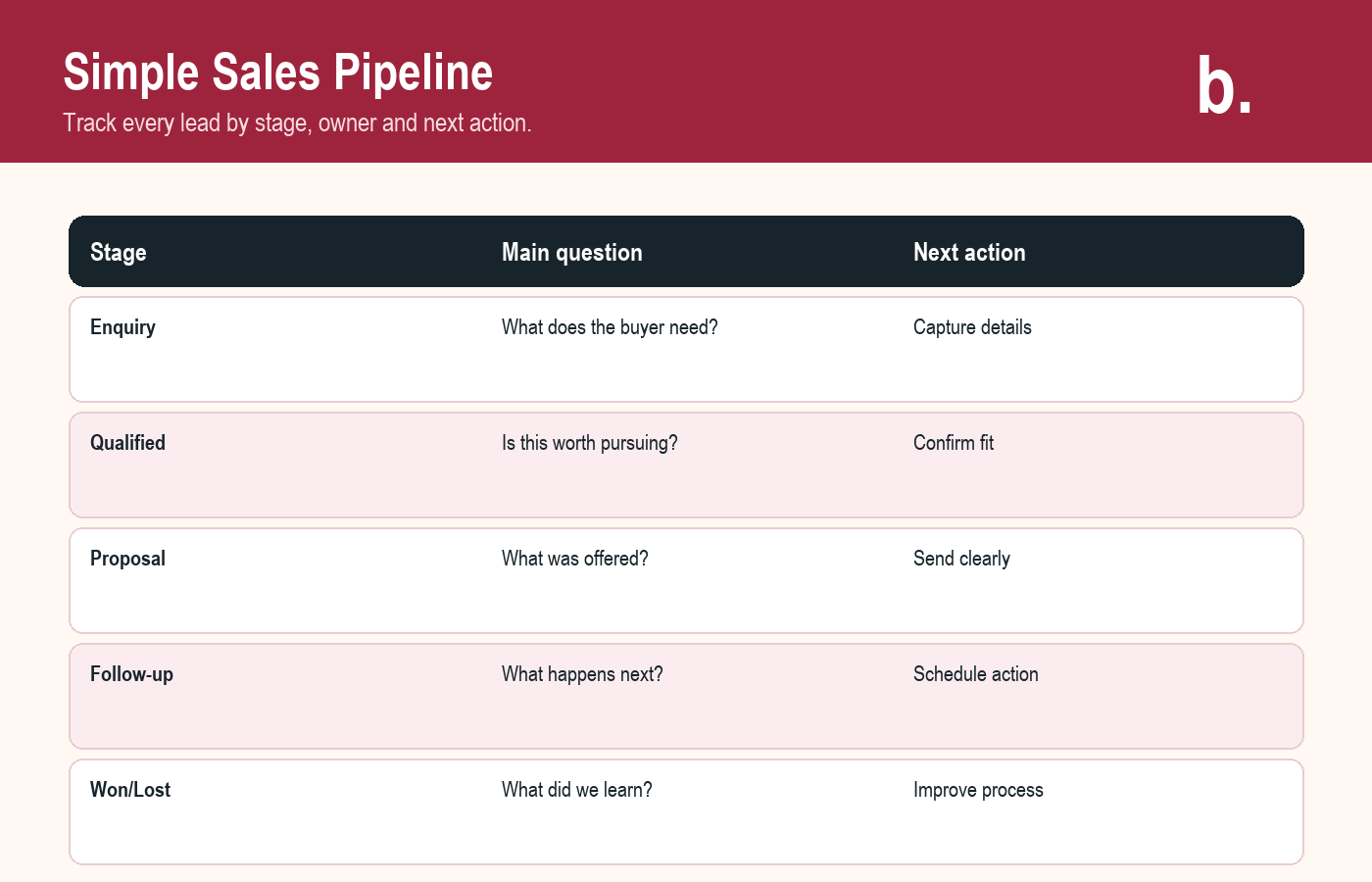
A simple sales pipeline for SMEs
Start with five stages. Add complexity only after the team is actually using it.
Stage | Meaning | Owner action |
|---|---|---|
New enquiry | Someone asked about the product or service | Capture source, contact and need |
Qualified lead | The buyer has a real need, budget or timing | Decide if worth pursuing |
Proposal or quote | Offer has been sent | Record amount, scope and due follow-up |
Follow-up | Buyer has not decided | Schedule the next action |
Won or lost | Deal closed or ended | Review reason and next opportunity |
What to track for every lead
A good pipeline needs enough detail to act, not so much detail that nobody updates it.
- Lead name and company.
- Contact method and source.
- Problem or requested service.
- Estimated value.
- Current stage.
- Next follow-up date.
- Owner responsible.
- Reason won or lost.
Why follow-up matters
Many buyers do not reject you. They get busy. If your business has no follow-up rhythm, you leave sales to memory and mood.
A polite follow-up process keeps opportunities moving without sounding desperate.
Tools you can use
You can start with a spreadsheet, Kanban board or simple CRM. The tool matters less than the habit.
Spreadsheet
Good for solo owners and early teams. Keep columns simple and review weekly.
Kanban board
Good when you want to drag leads through stages visually.
CRM
Useful when multiple people handle leads, quotes, email follow-ups and reporting.
Weekly pipeline review
- Look at every open proposal.
- Check leads with no next action.
- Follow up overdue deals.
- Identify which source produces good leads.
- Review lost reasons for pricing, fit or timing issues.
Useful next reads
The bottom line
A sales pipeline gives the owner visibility. It shows what is open, what is stuck, who needs follow-up and where sales are leaking.
Frequently Asked Questions
What is a sales pipeline?
A sales pipeline is a system that tracks leads through stages such as enquiry, qualified lead, proposal, follow-up and won or lost.
Do small businesses need a CRM?
Not always. A spreadsheet or Kanban board can work at the start, as long as every lead has a stage, owner and next action.
How often should I review my sales pipeline?
Weekly is a practical rhythm for most small businesses. Fast-moving sales teams may review it more often.
What is the most common pipeline mistake?
The most common mistake is recording leads without a next follow-up date or responsible owner.
Explore More Content
Table of Content